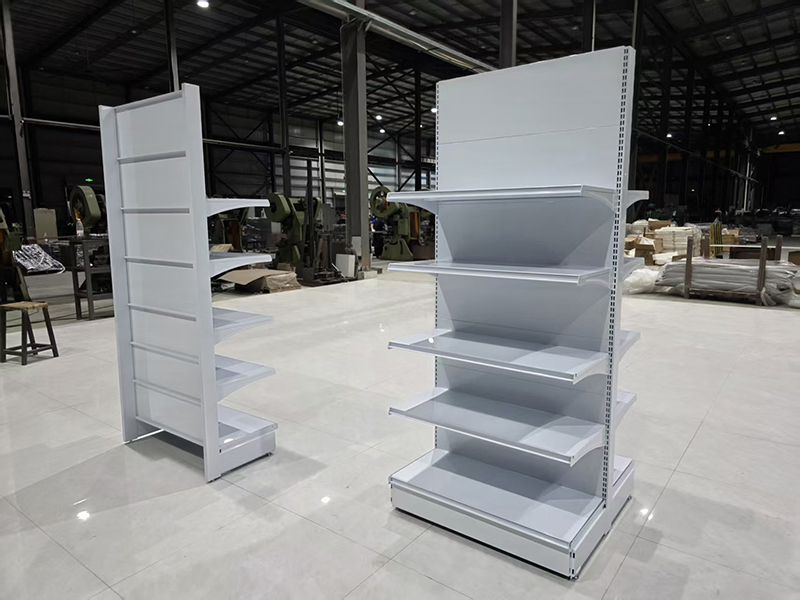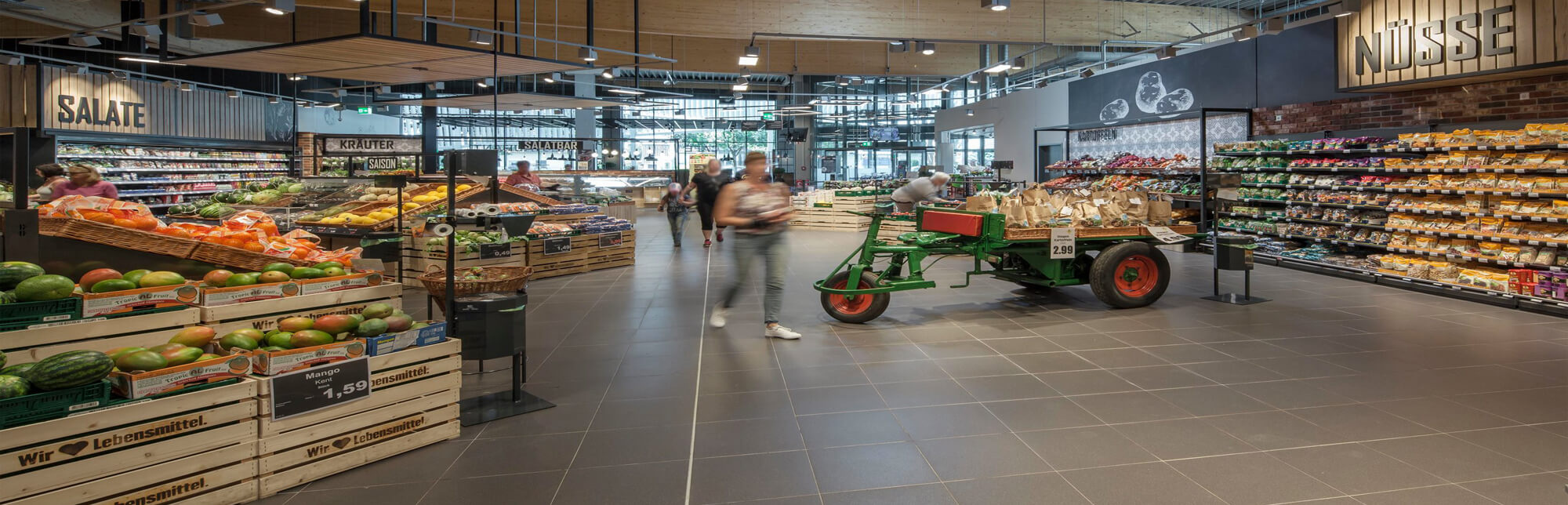
Single-sided and double-sided supermarket shelves serve different roles on the sales floor, and choosing the right one depends on how shoppers actually move through the store. Single-sided shelves are typically placed against perimeter walls or in back-to-back runs, guiding traffic along aisles and maximizing wall capacity. Double-sided gondola shelving, by contrast, stands freely in the middle of the sales area and doubles the facing count per footprint, which makes it ideal for high-velocity categories that need more product visibility.
In day-to-day operation, store teams run into several recurring issues. Double-sided units in heavy foot-traffic zones often suffer from overstocking on both faces, which slows restocking and makes facings look cluttered. Single-sided shelving against walls frequently gets under-utilized because staff load the lower shelves with slow-moving goods and leave the prime eye-level band empty. Structural stability is another concern: free-standing double-sided shelves can rock when overloaded or when casters are not braked, while poorly balanced single-sided racks risk tipping under heavy top-shelf loads. Finally, product mix mismatches - putting bulky or heavy items on narrow single-sided units - cause wasted space and harder access for shoppers.
To address these problems, plan the layout by traffic and category first. Use double-sided gondolas for bestsellers and high-turnover categories, and reserve single-sided runs for perimeter merchandising and heavier bulk lines. Balance facings and follow the low-stock, high-turnover rule on both faces so restocking is fast and shelves stay presentable. Secure stability by leveling and braking all free-standing units, anchoring tall single-sided racks to the wall where permitted, and enforcing per-level weight limits. Rotate eye-level product regularly and keep slow movers off prime bands. With consistent planograms, staff training and routine shelf checks, both single-sided and double-sided systems can run cleanly, safely and profitably in any store layout.

We are the most influential shop fitting company. And we will continue to work hard so that we can exceed your expectations! We hope to serve you soon with our products.

No 1, Yuhua Road, Shanghu town, Changshu City, Jiangsu Province, China 215551

+86 (0) 18015603878